


On 11 May 2017, Advocate General of the Court of Justice of the European Union, Mr. Maciej Szpunar, issued a landmark opinion on legal qualification of Uber, the US ride hailing app, claiming that, from the perspective of the EU law, Uber should be characterized and treated as a transport company rather than as a mere information technology provider. The question that was posed to the EU highest court and that, according to Advocate General, needs to be assessed on a rather technical level, deals with Uber’s standing within the EU regulatory framework. Although non-binding, the opinion given by the […]
Details
Businesses beware – imposing fines of up to 10% of the company’s Serbia-originated annual income in respect to enforcing Data Protection compliance will be one of the measures available to the Commissioner1 as of June 1, 2017, when the new Administrative Procedure Act is set to come into force. The changes to the Administrative Enforcement Procedure are going to allow this Data Protection Authority to enforce its decisions by fining companies in an amount considerably higher than the maximum enforcement-related fine of RSD 200,000.00 (approx. EUR 1,600.00) allowed by the current statute. This means that all companies will, if ordered […]
Details
On March 29, 2017, the European Commission (“Commission”) officially blocked the third attempt to implement the merger between the London Stock Exchange Group (“LSE”) and Deutsche Börse AG. Said decision created an insurmountable obstacle to further cooperation of the two groups which was aimed at creating a European powerhouse able to compete with strong American and fast-emerging Asian financial markets. The long planned merger was to give rise to the world’s largest exchange by total income, the biggest for equities listings, and to an entity that would control more derivatives trades than any other entity in the world.1 It would […]
Details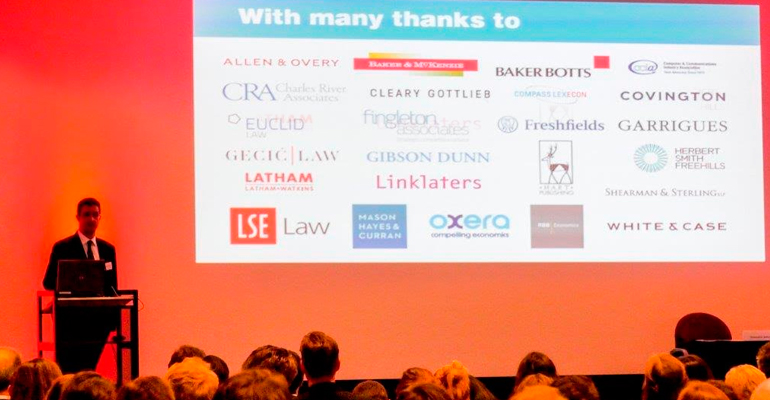
For the second year in a row, the Chillin’Competition conference drew practitioners, scholars and regulators from across Europe with a promise of an unparalleled array of distinguished speakers focusing on the topic of the neutrality principle and its role in competition law. And it certainly delivered! Alfonso Lamadrid, one of the founders of the Chillin’Competition blog (seen giving the opening remarks above), started the conference by stressing the importance of discussing the concept of substantive neutrality, its meaning and the scope of application in different fields of competition law. Keynote Address – Margrethe Vestager Keynote speaker Margrethe Vestager, EC Commissioner […]
Details
Results of one of the latest surveys recently carried out by British Regus, global work-space provider, have revealed that commuting is being experienced as a time waste for nearly one third of UK professionals, given that it does not fall within their working hours. Said survey led to the actualization of a pivotal judgment rendered by the Court of Justice of the European Union (hereinafter: ECJ) in 2015, according to which such daily journeys undertaken by workers without a fixed or habitual place of work between their homes and the premises of their customers constitute working time. After processing obtained […]
Details
On February 25, 2016, in the joined cases Promoimpresa srl v Consorzio dei Comuni della Sponda Bresciana del Lago di Garda e del Lago di Idro, Regione Lombardia, and Mario Melis, Tavolara Beach Sas, and Dionigi Piredda, Claudio Del Giudice v Comune di Loiri Porto San Paolo, Provincia di Olbia Tempio (hereinafter: Promoimpresa and others), Mr. Maciej Szpunar, an Advocate General at the EU Court of Justice of the European Union (the “ECJ”) since 2013, produced a nonbinding opinion for the ECJ stating that the European Union (the “EU”) law precludes national legislation under which the period of validity of […]
Details
On 23 January 2016 the Serbian Government adopted the new Regulation on the Content and Method of Submittal of Request for Issuing of Approval for Proposed Concentration (Official Gazette of RS no. 5/2016 – the “Regulation”) that will be effective as of 2 February 2016. The importance of the new Regulation lies in the fact that it introduces a simplified method for notification of the proposed concentration, harmonizing in that regards the national procedure with the existing EU procedure for notification of concentration. The simplified procedure allows merging undertakings to use a shorter notification form for concentration that are unlikely […]
Details

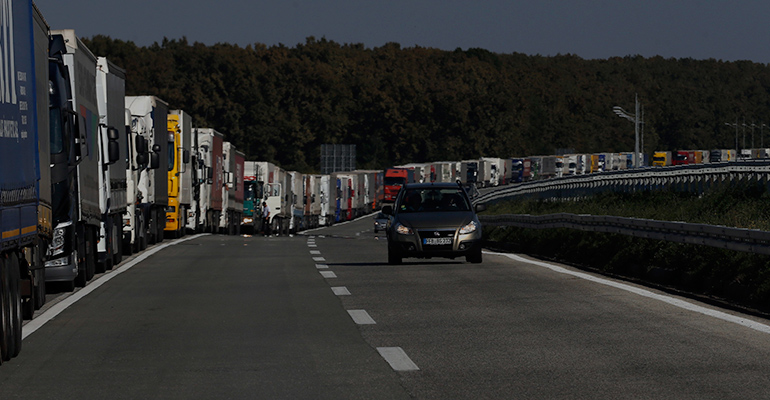
The purpose of this brief is to highlight the consequences of the unilateral decision by the state of Croatia, as a member of the European Union, to close its borders for transport coming from Serbia between 17 and 25 September 2015 and to emphasize potential breaches of legal principles the EU has been founded on. We take into consideration the multitude of acts, treaties and agreements which constitute legal sources of the European Union, as well as precedents set by the highest court of the EU, and explore potential avenues for legal redress for those whose interests were harmed by […]
Details